


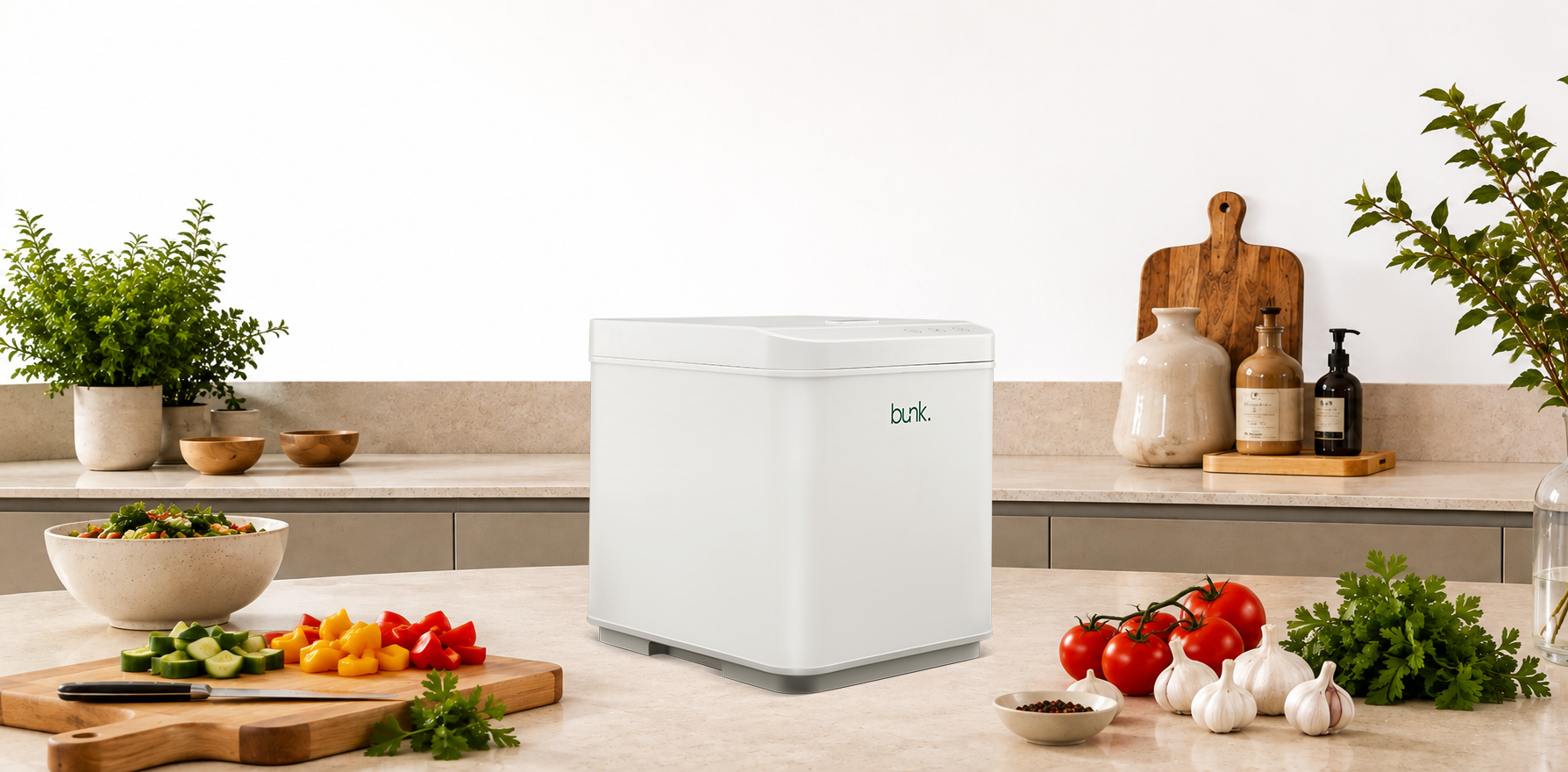
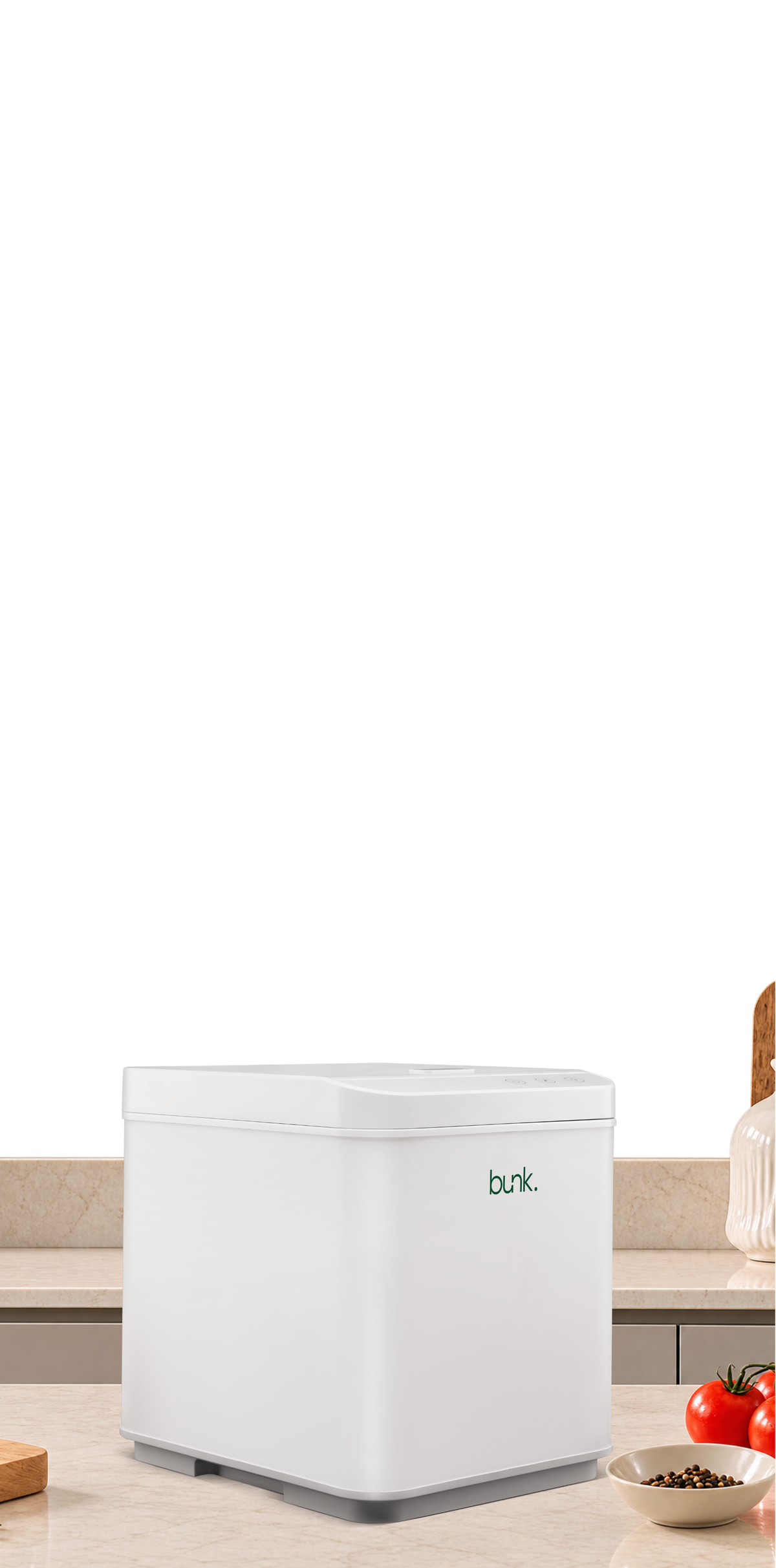
Why Choose Bunk's Smart Wet Waste Recycler?
India’s food waste crisis starts at home -that’s the mess The Gobbler’s built to fix:

Kitchen clutter
Aesthetically designed for urban kitchens. compact, quiet, and easy to place

Difficult composting
Automated, maintenance-free alternative where traditional composting is difficult - no mess or space issues in urban apartments and villas

Messy manual segregation
It simplifies how households segregate, manage, and process waste at the source

Bulky waste volume
The machine processes food waste by reducing volume by 95% and turning it into small amounts of dry soil like output we call GreenGrub.

Frequent disposal trips
By significantly reducing the weight and volume of food waste, it reduces the need for frequent trips to the main trash collection area.

Leaky trash bags
The Gobbler eliminates the "micro-stress" of dripping and messy trash bags.

Foul odors
It uses a completely closed system for odor-free operation, preventing food scraps from rotting and smelling in the kitchen.

Pest infestations
GreenGrub is free of moisture and odors that attract flies, ants, and rodents.

Wasted nutrients
It solves the problem of throwing away valuable organic matter by converting scraps into a nutrient-rich output for home gardening.

Environmental footprint
Champion sustainability - Process waste at home. Make it matter.
Smart Electric Wet Waste Recycler
In 1–5 hours, The Gobbler transforms your food waste into GreenGrub by reducing volume by up to 95%, — perfect for easy disposal or a nutrient-rich by-product for your garden.

Add Your Food Scraps
Load what’s left — peels, leftovers, cooked or raw. The Gobbler handles almost everything.

Press Start
Clean, no-fuss interface — just select your cycle and go.

Feed The Earth
In just 1–5 hours, your food waste becomes GreenGrub—perfect for feeding your plants
Built for the Indian kitchen
Fill and forget - no intervention needed.

Fill and forget – no intervention needed.

Carbon filters trap odours.

Countertop-friendly. Quieter than a dishwasher.
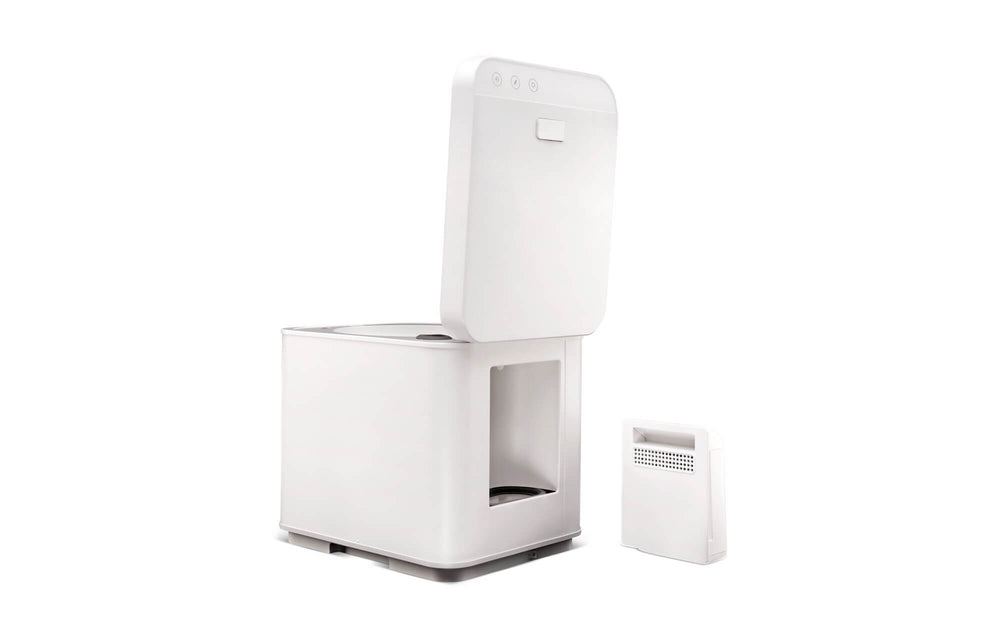
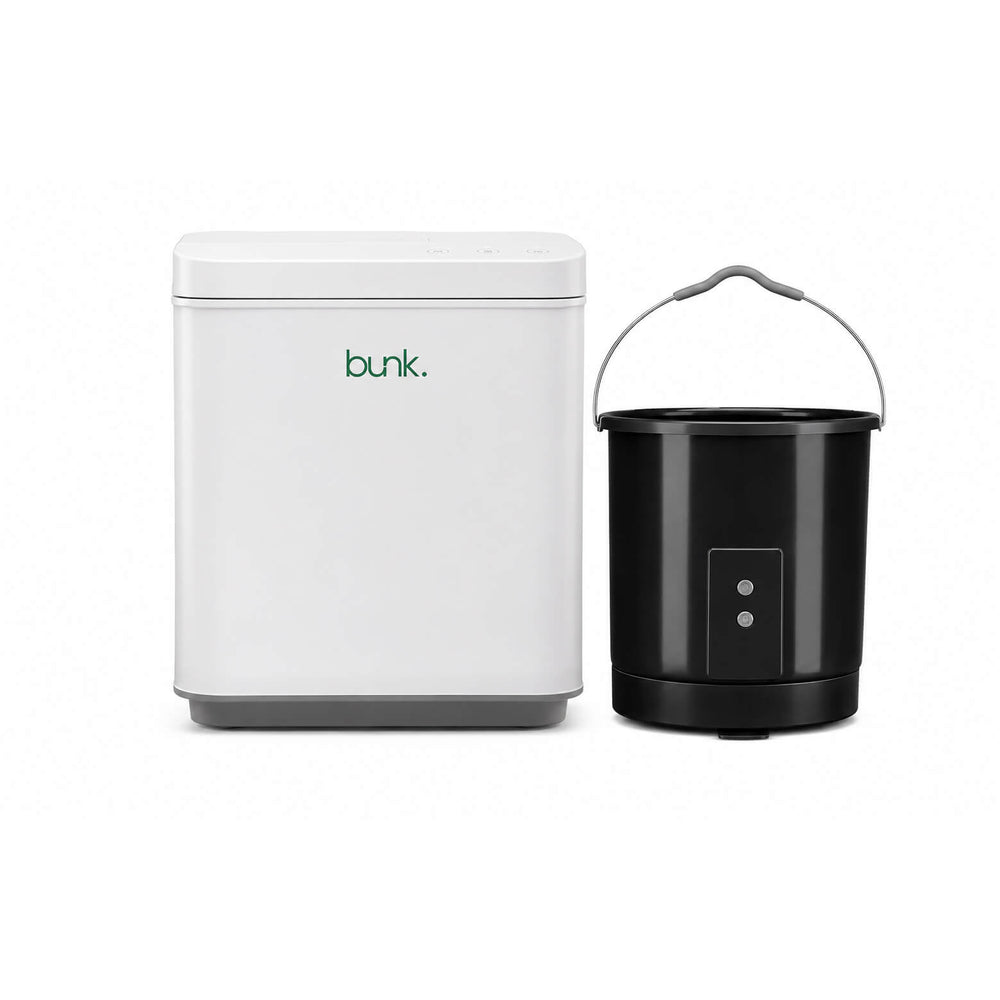
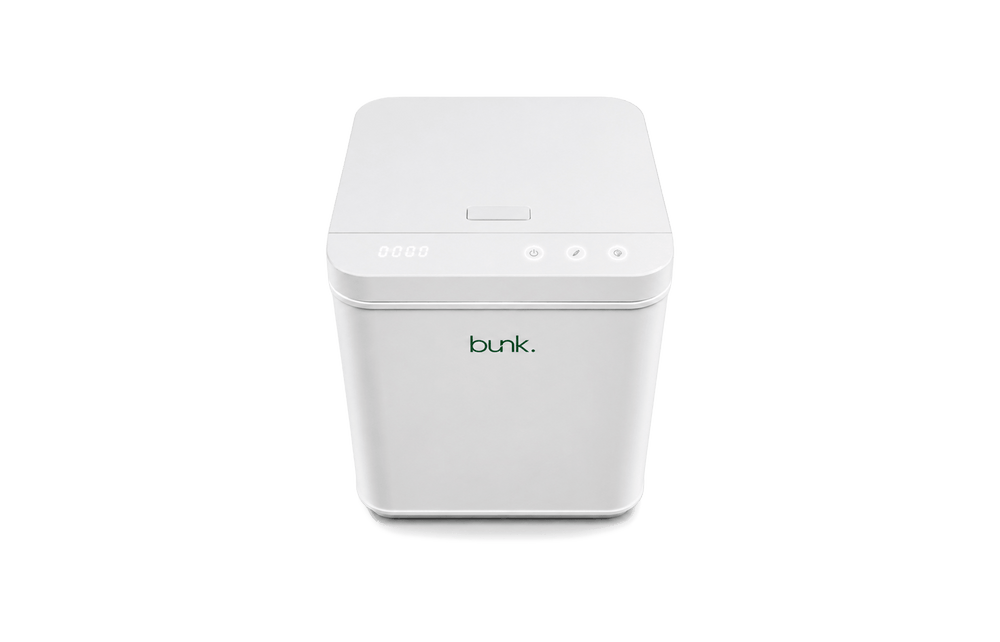

Dries, grinds, cools, and sterilises on its own.

Keeps waste out of landfills, one cycle at a time.

Under 1.5 kWh per cycle. Light on your electricity bill.


What Can You Put Inside the Wet Waste Recycler?


Veggie Scraps & Fruit Waste

Potato Peels

Onion Skins

Banana Peels

Apple Cores

Citrus Skins

Vegetable Peels
Cooked Leftovers

Rice, Dal & Vegetables
Miscellaneous

Tea Leaves

Coffee Powder

Wilted Flowers & Leaves
Coconut Bits (No Shells)

Coconut Scraps
Seafood, Poultry & Eggs

Seafood Waste

Chicken Bones

Egg Shells


Dairy & Starches

Curd

Paneer

Milk residue

Bread

Roti

Leftover rice
Rich Curries & Sweet Treats

Halwa

Kheer

Oily Gravy

Mithai
✓ Low Quantities Only

Pineapple

Watermelon

Small non-poultry bones

Whole Vegetables

Must be chopped

Aubergine

Pumpkin
✂ Cut Before Adding
Fibrous Stems

Banana stems

Drumstick Stems
✂ Cut To Prevent Strain
Thick Peels & Skins

Pumpkin skin

Ash gourd
✂ Always Slice First ✂ Manual slicing needed


Coconut Shells — Strictly Prohibited
Never place in recycler
Non-Organics & Hardware

Plastics

Aluminium foil

Glass

Metal
Pure Fats & Heavy Waste

Cooking oil

Ghee

Large Bones
Personal & Synthetic Waste

Sachets

Chewing gum
Paper & Seeds

Paper

Cardboard

Mango seeds

Hard Seeds

Hard Pits
Veggie Scraps & Fruit Waste
Potato Peels
Onion Skins
Banana Peels
Apple Cores
Citrus Skins
Vegetable Peels
Cooked Leftovers
Rice, Dal & Vegetables
Miscellaneous
Tea Leaves
Coffee Powder
Wilted Flowers & Leaves
Coconut Bits (No Shells)
Coconut Scraps
Seafood, Poultry & Eggs
Seafood Waste
Chicken Bones
Egg Shells
Dairy & Starches
Curd
Paneer
Milk residue
Bread
Roti
Leftover rice
Rich Curries & Sweet Treats
Halwa
Kheer
Oily Gravy
Mithai
✓ Low Quantities Only
Pineapple
Watermelon
Small non-poultry bones
Whole Vegetables
Must be chopped
Aubergine
Pumpkin
✂ Cut Before Adding
Fibrous Stems
Banana stems
Drumstick Stems
✂ Cut To Prevent Strain
Thick Peels & Skins
Pumpkin skin
Ash gourd
✂ Always Slice First ✂ Manual slicing needed
Coconut Shells — Strictly Prohibited
Never place in recycler
Non-Organics & Hardware
Plastics
Aluminium foil
Glass
Metal
Pure Fats & Heavy Waste
Cooking oil
Ghee
Large Bones
Personal & Synthetic Waste
Sachets
Chewing gum
Paper & Seeds
Paper
Cardboard
Mango seeds
Hard Seeds
Hard Pits
Transform Kitchen Waste into Nutrient-Rich GreenGrub
Your food waste doesn't disappear — it transforms. GreenGrub is a soil booster packed with essential nutrients that help your home garden flourish. Dry, brown, and completely odourless — it's organic matter that feeds the earth, not the landfill.

GreenGrub is packed with Nitrogen, Phosphorus, and Potassium — the essential nutrients your plants crave.

The output is dry and sterilised. No smell, no mess — just clean, soil-ready organic matter.

Mix into garden soil or potting mix, or simply dispose of it guilt-free. Either way, it's better than a landfill.
Everything you need to know.
The Gobbler Uses A Sophisticated Three-Stage Process: Heat (Removes Moisture And Destroys 99% Of Bacteria), Grind (Rotary Blades Transform Scraps Into Dry Matter), And Cool (Safe Handling Of The Output).
Depending on the volume and type of food waste, the cycle time can be customised from 1 to 5 hours.
Yes, you can add more food waste during an active cycle. Simply open the lid and add your scraps at any time.
The Gobbler accepts most food scraps including fruit and vegetable peels, cooked food, meat, dairy, and small bones. Refer to the owners manual or what goes in section for more details.
We recommend a quick wipe-down weekly and a deeper clean once a month for optimal performance.
Once the cycle is complete and the unit has cooled, remove the inner bucket using the handle. Tap out any remaining GreenGrub output, then wipe the bucket with a dry or lightly damp cloth. Avoid soaking the bucket in water or using abrasive scrubbers, as this can damage the coating.
Yes, the inner bucket can be rinsed with warm water and a mild dish soap. Ensure it is completely dry before placing it back into the unit. Never put the bucket in a dishwasher.
Pour water into the bucket up to the max-fill line, place the bucket back into the machine, close the lid, and press the self-cleaning symbol on the touch panel. The clean indicator will light up and the cycle runs for approximately 60 minutes. Do not open the lid during this process.
We recommend a quick wipe-down of the bucket and interior after every 3–5 cycles, and a full self-cleaning cycle once a week for households using the Gobbler daily. If you notice any residual odour or residue build-up, run a self-cleaning cycle immediately.
Wipe the exterior with a soft, slightly damp cloth. Do not use chemical cleaners, solvents, or abrasive pads on the casing. Keep the air inlet and outlet vents free of dust and blockages — a soft dry brush works well for this.
Residue build-up inside the bucket can cause the stirring blade to jam , affect heating efficiency, and produce off-odours. Regular cleaning prevents most operational issues and extends the life of the unit.
The odors from the kitchen waste is filtered through the carbon filter on the Gobbler which greatly reduces strong odors. However, If you are cycling rotten, pungent, or potent food wastes (such as rotten meat, fish bones, or old cheese), you may notice odors. Depending on the age of the carbon filters, they may not be as effective, so you may also get an odor. In those cases, you can change the filter.
Remove the used filter unit from the back, insert the new filter in the same orientation. Replacement filters are available at bunkit.co.in.
No. The activated carbon filter cannot be washed or regenerated. Once saturated, it must be replaced. Attempting to wash it will damage the filter media and reduce its effectiveness.
This can happen with high-moisture inputs like watermelon, soups, or very wet plate scrapings. Run an additional cycle on the same batch — select a longer cycle time (3H or 5H) for wetter loads. Avoid adding liquids or liquid-heavy waste directly.
Occasional variation in grinding noise is normal, especially with harder inputs like small bones or dense vegetable matter. If the noise is accompanied by a buzzing alarm or an error code on the display, stop the cycle and refer to the troubleshooting guide.
Unusual output odour is typically caused by inputs that should not be placed in the Gobbler — such as cooking oils, alcohol, or certain hard seeds. Check the Do's and Don'ts list and ensure the carbon filter is not overdue for replacement.
Check the digital display for an error code (Er:01 through Er:06). Each code has a specific resolution — refer to the troubleshooting list in the user manual or at bunkit.co.in. For Er:01 (blade jam), power off the unit before opening the lid to remove the obstruction.
Hold the on/off symbol on the touch panel for 10 seconds to perform an All Clear reset. If the error persists after restarting, contact bunk support at support@bunkit.co.in.
Yes. Please refer to the warranty documentation on bunkit.co.in for full warranty terms. Note that unauthorized repair, disassembly, or use of non-certified replacement parts will void the warranty.
Replacement carbon filters and other certified accessories are available directly at bunkit.co.in. Only use parts supplied or approved by bunk — third-party components may affect performance and void the warranty.
Contact the bunk support team at support@bunkit.co.in if you require any additional information.
What it's actually like to live with.
Curating Ease.
